Primate Conservation Slideshow

|
1) Some of the most endangered species in the world belong to the group of animals known as the primates.
 Notes: Title Slide: The Primates – Conservation of Endangered Species
Question for younger students: What does “endangered” mean?
Artwork © by: Chris Lutmerding
Notes: Title Slide: The Primates – Conservation of Endangered Species
Question for younger students: What does “endangered” mean?
Artwork © by: Chris Lutmerding
Notes: Title Slide: The Primates – Conservation of Endangered Species
Question for younger students: What does “endangered” mean?
Artwork © by: Chris Lutmerding
2) Members of this group, which include both the monkeys and the apes, are found mainly in tropical rain forests around the world. The orangutan shown here lives only on the south Pacific islands of Borneo and Sumatra.
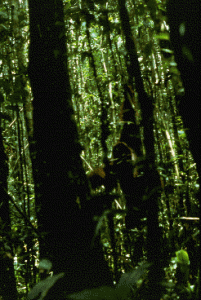 Notes: Adult male orangutan climbs low in the trees in a tropical rain forest.
Scientific name: Pongo pygmaeus
orangutan — o-RANG-ah-tan
Photo © by: Diana Mossman
Notes: Adult male orangutan climbs low in the trees in a tropical rain forest.
Scientific name: Pongo pygmaeus
orangutan — o-RANG-ah-tan
Photo © by: Diana Mossman
Notes: Adult male orangutan climbs low in the trees in a tropical rain forest.
Scientific name: Pongo pygmaeus
orangutan — o-RANG-ah-tan
Photo © by: Diana Mossman
3) Orangutans are adapted to a life in the trees. Although they are able to move on the ground, they spend much of their time climbing through the forest looking for food. This adult male is at home in the trees despite his large size.
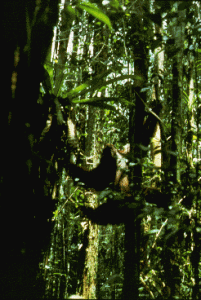 Notes: Same sequence — orangutan is now suspended by all four limbs between the trees.
Photo © by: Diana Mossman
Notes: Same sequence — orangutan is now suspended by all four limbs between the trees.
Photo © by: Diana Mossman
Notes: Same sequence — orangutan is now suspended by all four limbs between the trees.
Photo © by: Diana Mossman
4) The majority of primate species live in the tropical rain forests of Africa, Asia, and Central and South America. These species can only survive if the forests are preserved.
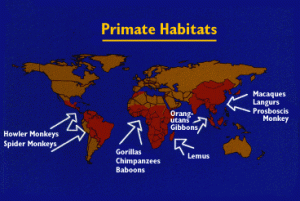 Notes: Map — Primate Habitats (Areas in red indicate current non-human primate habitats.)
Photo © by: Courtesy WRPRC AV Archive
Notes: Map — Primate Habitats (Areas in red indicate current non-human primate habitats.)
Photo © by: Courtesy WRPRC AV Archive
Notes: Map — Primate Habitats (Areas in red indicate current non-human primate habitats.)
Photo © by: Courtesy WRPRC AV Archive
5) All animals live in a habitat which must meet their needs if they are to survive. How do primates use their habitat?
 Notes:Question slide: How Do Primates Use Their Habitats?
Question: What is a habitat?
Artwork © by: Courtesy WRPRC AV Archive
Notes:Question slide: How Do Primates Use Their Habitats?
Question: What is a habitat?
Artwork © by: Courtesy WRPRC AV Archive
Notes:Question slide: How Do Primates Use Their Habitats?
Question: What is a habitat?
Artwork © by: Courtesy WRPRC AV Archive
6) Primates, like other animals, rely on their habitat to provide food, water, shelter and protection from danger. They also must be able to move through their habitat and meet other animals of the same species to breed and so insure the survival of their species.
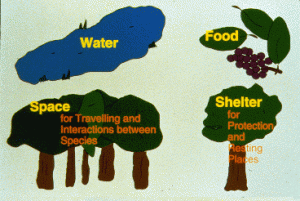 Notes:Graphic: Water Food Shelter Space
The concept of habitat as space to accommodate interactions between and within species may be new to the student.
Artwork © by: Courtesy WRPRC AV Archive
Notes:Graphic: Water Food Shelter Space
The concept of habitat as space to accommodate interactions between and within species may be new to the student.
Artwork © by: Courtesy WRPRC AV Archive
Notes:Graphic: Water Food Shelter Space
The concept of habitat as space to accommodate interactions between and within species may be new to the student.
Artwork © by: Courtesy WRPRC AV Archive
7) Primates, such as this squirrel monkey, use trees as resting places. These small South American monkeys remain hidden from meat-eating snakes and birds as they rest among the foliage in the heat of the day.
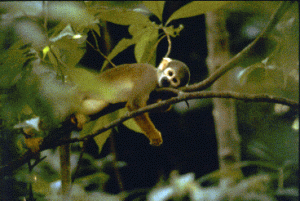 Notes:Small monkey with white “spectacles” at rest, stretched out on a branch.
Scientific name: Saimiri sciureus
The main predators of primates include birds and snakes (small species) and cats (larger species) as well as humans.
Photo © by: Christopher Coe
Notes:Small monkey with white “spectacles” at rest, stretched out on a branch.
Scientific name: Saimiri sciureus
The main predators of primates include birds and snakes (small species) and cats (larger species) as well as humans.
Photo © by: Christopher Coe
Notes:Small monkey with white “spectacles” at rest, stretched out on a branch.
Scientific name: Saimiri sciureus
The main predators of primates include birds and snakes (small species) and cats (larger species) as well as humans.
Photo © by: Christopher Coe
8) Other monkeys may choose trees that offer safety for other reasons. The proboscis monkey of southeast Asia sleeps in trees near water. This discourages the approach of predators from the ground.
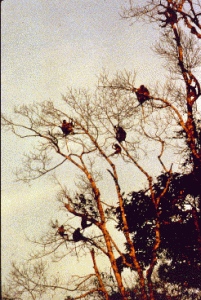 Notes:A group of monkeys sits high in a bare tree.
Scientific name: Nasalis larvatus
proboscis — pro-BOSS-is
Question for younger students: What predators approach from the ground? From the air?
Photo © by: Diana Mossman
Notes:A group of monkeys sits high in a bare tree.
Scientific name: Nasalis larvatus
proboscis — pro-BOSS-is
Question for younger students: What predators approach from the ground? From the air?
Photo © by: Diana Mossman
Notes:A group of monkeys sits high in a bare tree.
Scientific name: Nasalis larvatus
proboscis — pro-BOSS-is
Question for younger students: What predators approach from the ground? From the air?
Photo © by: Diana Mossman
9) Even the large apes often sleep in trees. Here we see a nest built by an orangutan in the top of a tree.
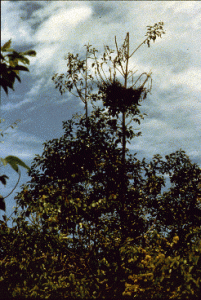 Notes:Tree tops with nest in top center screen.
Question: Do you see the nest?
Photo © by: Diana Mossman
Notes:Tree tops with nest in top center screen.
Question: Do you see the nest?
Photo © by: Diana Mossman
Notes:Tree tops with nest in top center screen.
Question: Do you see the nest?
Photo © by: Diana Mossman
10) Trees are also an important source of food for primates. Buds, leaves and fruit provide the basic diet of many species. Here a spider monkey enjoys a ripe fruit. Monkeys and apes who rely on fruit need a large home range. They must move from area to area as different fruits become ripe.
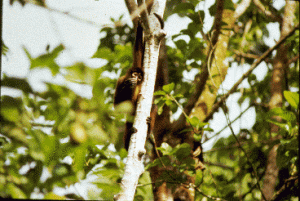 Notes:Monkey eating piece of fruit supports herself against a tree trunk with feet, one arm and a tail (visible at top near hand).
Scientific name: Ateles geoffroyi
Questions: What is a home range? Why should it be large for animals that rely on fruit?
Spider monkeys live in Central and South American forests.
Photo © by: John Montenero
Notes:Monkey eating piece of fruit supports herself against a tree trunk with feet, one arm and a tail (visible at top near hand).
Scientific name: Ateles geoffroyi
Questions: What is a home range? Why should it be large for animals that rely on fruit?
Spider monkeys live in Central and South American forests.
Photo © by: John Montenero
Notes:Monkey eating piece of fruit supports herself against a tree trunk with feet, one arm and a tail (visible at top near hand).
Scientific name: Ateles geoffroyi
Questions: What is a home range? Why should it be large for animals that rely on fruit?
Spider monkeys live in Central and South American forests.
Photo © by: John Montenero
11) Smaller primates, such as this South American buffy-headed marmoset, use another tree product as a food source — tree sap or gum. These animals, about the size of a squirrel, lead a very active life in the trees.
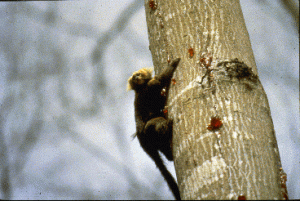 Notes:Very small monkey with reddish head clings to a tree trunk. Notice beads of sap on tree.
Scientific name: Callithrix flaviceps
marmoset — MAR-mah-set
Question: What form of tree sap do humans eat? (Answers — maple syrup, chicle)
Photo © by: Luis Claudio Marigo
Notes:Very small monkey with reddish head clings to a tree trunk. Notice beads of sap on tree.
Scientific name: Callithrix flaviceps
marmoset — MAR-mah-set
Question: What form of tree sap do humans eat? (Answers — maple syrup, chicle)
Photo © by: Luis Claudio Marigo
Notes:Very small monkey with reddish head clings to a tree trunk. Notice beads of sap on tree.
Scientific name: Callithrix flaviceps
marmoset — MAR-mah-set
Question: What form of tree sap do humans eat? (Answers — maple syrup, chicle)
Photo © by: Luis Claudio Marigo
12) Sap is a high energy food important to these small animals. But only a few trees in a forest produce sap at any one time.
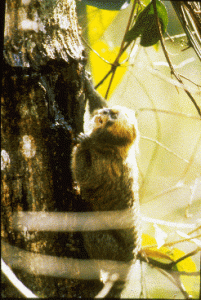 Notes:Close up of buffy-headed marmoset feeding.
These monkeys gouge holes in the tree bark using their front teeth.
Photo © by: Luis Claudio Marigo
Notes:Close up of buffy-headed marmoset feeding.
These monkeys gouge holes in the tree bark using their front teeth.
Photo © by: Luis Claudio Marigo
Notes:Close up of buffy-headed marmoset feeding.
These monkeys gouge holes in the tree bark using their front teeth.
Photo © by: Luis Claudio Marigo
13) Primates feed on many different types of foliage Here a uakari chews on a stem. The uakaris eat only plant material, but many primates eat some of the insects they find in the trees. Other primates may eat birds’ eggs and small animals such as frogs.
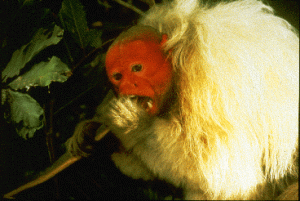 Notes: A monkey with a red face and hairless head chewing on a stem.
Scientific name: Cacajao calvus
uakari — wah-CAR-ee
This species, the bald uakari, is found in South America.
Photo © by: Luis Claudio Marigo
Notes: A monkey with a red face and hairless head chewing on a stem.
Scientific name: Cacajao calvus
uakari — wah-CAR-ee
This species, the bald uakari, is found in South America.
Photo © by: Luis Claudio Marigo
Notes: A monkey with a red face and hairless head chewing on a stem.
Scientific name: Cacajao calvus
uakari — wah-CAR-ee
This species, the bald uakari, is found in South America.
Photo © by: Luis Claudio Marigo
14) Some types of foliage seem to be everywhere you look. This mountain gorilla feeds on leaves and wild celery which grow throughout its African habitat.
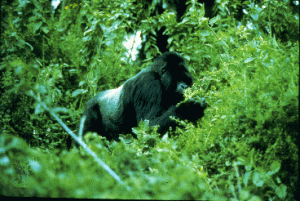 Notes: A large male silverback gorilla surrounded by vegetation.
Scientific name: Gorilla gorilla beringei
Photo © by: Bill Weber & Amy Vedder
Notes: A large male silverback gorilla surrounded by vegetation.
Scientific name: Gorilla gorilla beringei
Photo © by: Bill Weber & Amy Vedder
Notes: A large male silverback gorilla surrounded by vegetation.
Scientific name: Gorilla gorilla beringei
Photo © by: Bill Weber & Amy Vedder
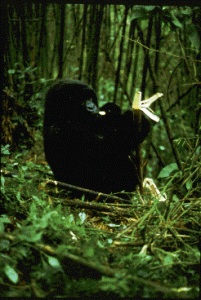
15) Other food sources are harder to find. Bamboo, a favorite item in the gorilla diet, grows only in small patches.
16) In some areas monkeys have adapted to the human habitat. The langurs and macaques of India can live near cities — and have some of their food provided by humans.
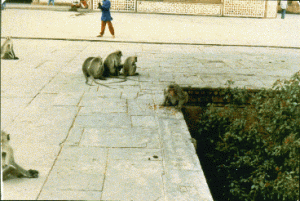 Notes: Monkeys feeding in stone courtyard.
Scientific names: Presbytis entellus (sacred langur) Macaca mulatta (rhesus macaque)
langurs — LANG-grrs macaques — ma-KACKS
Question: Do we ever provide food for wild animals?
Photo © by: K.K. Dua
Notes: Monkeys feeding in stone courtyard.
Scientific names: Presbytis entellus (sacred langur) Macaca mulatta (rhesus macaque)
langurs — LANG-grrs macaques — ma-KACKS
Question: Do we ever provide food for wild animals?
Photo © by: K.K. Dua
Notes: Monkeys feeding in stone courtyard.
Scientific names: Presbytis entellus (sacred langur) Macaca mulatta (rhesus macaque)
langurs — LANG-grrs macaques — ma-KACKS
Question: Do we ever provide food for wild animals?
Photo © by: K.K. Dua
17) However, monkeys who live near humans may compete for the same resources. Here a langur takes food from a human. At other times these monkeys may take food being grown by people for their own use.
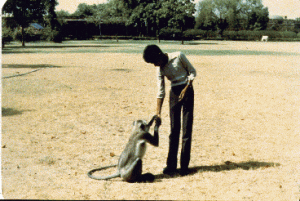 Notes: Human hands food to a monkey.
Question: How do you think farmers feel when monkeys steal their crops?
Photo © by: K.K. Dua
Notes: Human hands food to a monkey.
Question: How do you think farmers feel when monkeys steal their crops?
Photo © by: K.K. Dua
Notes: Human hands food to a monkey.
Question: How do you think farmers feel when monkeys steal their crops?
Photo © by: K.K. Dua
18) To humans, the forest may seem like an unlimited resource. Here we see a spot of light that indicates one tree has fallen. Losing a few trees does not threaten forest-living animals.
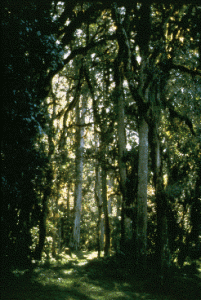 Notes: View of a forest floor. Most is shaded, but there is an obvious spot of sunlight.
Photo © by: Dennis Rasmussen
Notes: View of a forest floor. Most is shaded, but there is an obvious spot of sunlight.
Photo © by: Dennis Rasmussen
Notes: View of a forest floor. Most is shaded, but there is an obvious spot of sunlight.
Photo © by: Dennis Rasmussen
19) This logging camp in a forest in Borneo (home of the orangutans) is called a “selective logging project”. Such projects provide jobs and income for people.
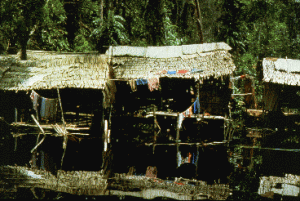 Notes: Houses built between a forest and a river; laundry hangs on porches.
Remind students that Borneo is an island in the Pacific.
Photo © by: Diana Mossman
Notes: Houses built between a forest and a river; laundry hangs on porches.
Remind students that Borneo is an island in the Pacific.
Photo © by: Diana Mossman
Notes: Houses built between a forest and a river; laundry hangs on porches.
Remind students that Borneo is an island in the Pacific.
Photo © by: Diana Mossman
20) However, logging can result in large-scale destruction of animal habitat. In this area trees not harvested for wood were smashed by heavy machinery, or cut to provide a cushion for the larger, more valuable trees.
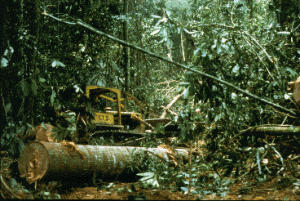 Notes: Fallen trees in foreground; equipment used for moving logs is visible in background.
Photo © by: Diana Mossman
Notes: Fallen trees in foreground; equipment used for moving logs is visible in background.
Photo © by: Diana Mossman
Notes: Fallen trees in foreground; equipment used for moving logs is visible in background.
Photo © by: Diana Mossman
21) The result can be the complete loss of an area of forest. The animals who lived in this area may have nowhere to go.
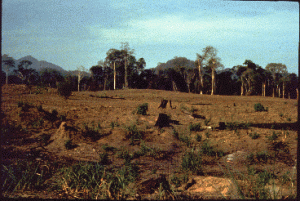 Notes: Clear cut area in foreground. Some trees are visible in the background.
Question to think about: What happens to animals when their habitat is destroyed?
Photo © by: Warren Brockelman
Notes: Clear cut area in foreground. Some trees are visible in the background.
Question to think about: What happens to animals when their habitat is destroyed?
Photo © by: Warren Brockelman
Notes: Clear cut area in foreground. Some trees are visible in the background.
Question to think about: What happens to animals when their habitat is destroyed?
Photo © by: Warren Brockelman
22) The result can be the complete loss of an area of forest. The animals who lived in this area may have nowhere to go.
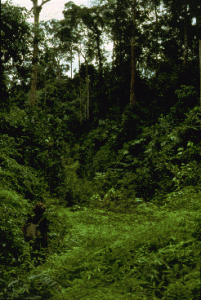 Notes: Clear cut area in foreground. Some trees are visible in the background.
Question to think about: What happens to animals when their habitat is destroyed?
Photo © by: Warren Brockelman
Notes: Clear cut area in foreground. Some trees are visible in the background.
Question to think about: What happens to animals when their habitat is destroyed?
Photo © by: Warren Brockelman
Notes: Clear cut area in foreground. Some trees are visible in the background.
Question to think about: What happens to animals when their habitat is destroyed?
Photo © by: Warren Brockelman
23) Most forests recover slowly from human activity. In the background is an uncut forest. In front is an area which was used for farming 15 years ago. Notice the size difference between the trees.
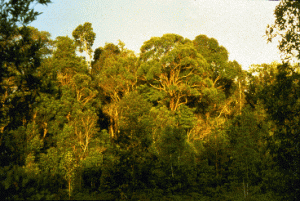 Notes: A forest in Borneo. In foreground shorter, younger trees; mature trees in background.
For forest living animals, space is three-dimensional. The height of trees and what kinds of trees are growing in a particular area is just as important as the amount of forested land.
Photo © by: Diana Mossman
Notes: A forest in Borneo. In foreground shorter, younger trees; mature trees in background.
For forest living animals, space is three-dimensional. The height of trees and what kinds of trees are growing in a particular area is just as important as the amount of forested land.
Photo © by: Diana Mossman
Notes: A forest in Borneo. In foreground shorter, younger trees; mature trees in background.
For forest living animals, space is three-dimensional. The height of trees and what kinds of trees are growing in a particular area is just as important as the amount of forested land.
Photo © by: Diana Mossman
24)Intact forest habitat still covers some areas in all parts of the world where primates live. These tropical rain forests of Africa, southeast Asia, Central and South America have been home to primates for millions of years — but now they are disappearing because of human activity.
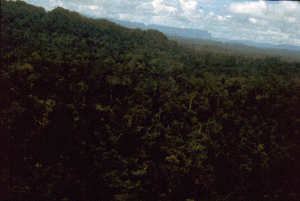 Notes: Aerial view of unlogged Bornean rain forest.
Photo © by: Diana Mossman
Notes: Aerial view of unlogged Bornean rain forest.
Photo © by: Diana Mossman
Notes: Aerial view of unlogged Bornean rain forest.
Photo © by: Diana Mossman
25) This hillside in Africa was once part of a forest. Now it is a nearly treeless farmland.
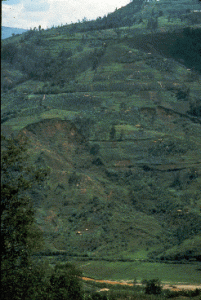 Notes: Aerial view of once-forested African high land.
Question: Do you see the fields in this picture?
Photo © by: Bill Weber & Amy Vedder
Notes: Aerial view of once-forested African high land.
Question: Do you see the fields in this picture?
Photo © by: Bill Weber & Amy Vedder
Notes: Aerial view of once-forested African high land.
Question: Do you see the fields in this picture?
Photo © by: Bill Weber & Amy Vedder
26) Without the anchor of tree roots, the land begins to erode. When this happens, neither farmers nor forest-living animals are able to use the land.
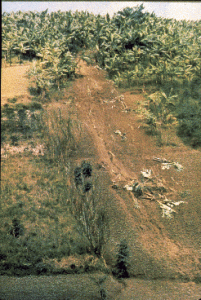 Notes: Partially forested hillside, with clear signs of erosion.
Photo © by: Bill Weber & Amy Vedder
Notes: Partially forested hillside, with clear signs of erosion.
Photo © by: Bill Weber & Amy Vedder
Notes: Partially forested hillside, with clear signs of erosion.
Photo © by: Bill Weber & Amy Vedder
27) Not all primates live in forests. These baboons are adapted to life in the grasslands, or savannas of the African plains.
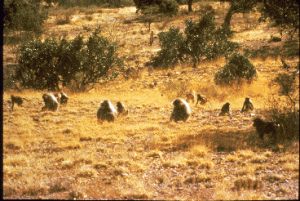 Notes: A group of hamadryas baboons feeding on the ground.
Scientific name: Papio hamadryas
Photo © by: Hans Kummer
Notes: A group of hamadryas baboons feeding on the ground.
Scientific name: Papio hamadryas
Photo © by: Hans Kummer
Notes: A group of hamadryas baboons feeding on the ground.
Scientific name: Papio hamadryas
Photo © by: Hans Kummer
28) Humans use these same areas for farms and to raise animals. As human populations increase, more land is used for farming, and less wild habitat is left.
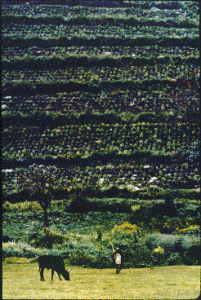 Notes: Agricultural scene — in the foreground a human herder with cattle; in the background a hillside covered with crops.
Photo © by: Bill Weber & Amy Vedder
Notes: Agricultural scene — in the foreground a human herder with cattle; in the background a hillside covered with crops.
Photo © by: Bill Weber & Amy Vedder
Notes: Agricultural scene — in the foreground a human herder with cattle; in the background a hillside covered with crops.
Photo © by: Bill Weber & Amy Vedder
29) Humans change the landscape, leaving islands of forest or savanna, surrounded by homes and farms. These small areas may not be large enough to support a wild population of primates.
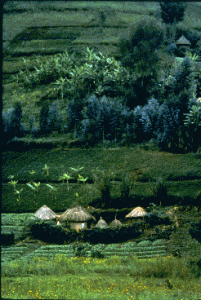 Notes: An African farm. The human habitat of buildings and fields surrounds a small patch of forest.
The concept of habitat ‘islands’ may be new to the students. An island is an area of usable habitat surrounded by land (or water) which does not meet the needs of that species.
Photo © by: Bill Weber & Amy Vedder
Notes: An African farm. The human habitat of buildings and fields surrounds a small patch of forest.
The concept of habitat ‘islands’ may be new to the students. An island is an area of usable habitat surrounded by land (or water) which does not meet the needs of that species.
Photo © by: Bill Weber & Amy Vedder
Notes: An African farm. The human habitat of buildings and fields surrounds a small patch of forest.
The concept of habitat ‘islands’ may be new to the students. An island is an area of usable habitat surrounded by land (or water) which does not meet the needs of that species.
Photo © by: Bill Weber & Amy Vedder
30) Small areas are more vulnerable to destruction by fire or other natural catastrophe. Unconnected islands of forest make it impossible for primates to move to a safer area.
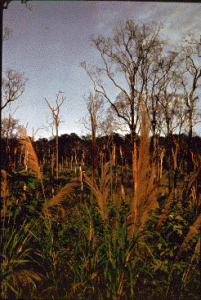 Notes: Bare trees and grasses.
Photo © by: Warren Brockelman
Notes: Bare trees and grasses.
Photo © by: Warren Brockelman
Notes: Bare trees and grasses.
Photo © by: Warren Brockelman
31) Habitat destruction is not the only danger primates face from humans. Primates have been used for many purposes by humans. Where large populations remain in the wild, the capture or killing of a few animals is not a threat. But as wild populations become smaller and smaller, animals taken for human use can be a major loss.
 Notes: Title Slide: Human Threats to Primates, Habitat Destruction, Capture, Killing
Artwork © by: Courtesy WRPRC AV Archive
Notes: Title Slide: Human Threats to Primates, Habitat Destruction, Capture, Killing
Artwork © by: Courtesy WRPRC AV Archive
Notes: Title Slide: Human Threats to Primates, Habitat Destruction, Capture, Killing
Artwork © by: Courtesy WRPRC AV Archive
32) Some people find monkeys attractive as pets. This young spider monkey was captured in a South American forest. While international laws regulate the transport of animals between countries for the pet trade, it is difficult to prevent people who live in the same areas as these monkeys from keeping them as pets.
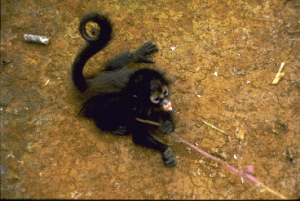 Notes: A young South American monkey is pulled along the ground on a leash.
Scientific name: Ateles geoffroyi
Question: What would you tell a friend who wanted to have a monkey for a pet?
Photo © by: Ernesto R. Luna
Notes: A young South American monkey is pulled along the ground on a leash.
Scientific name: Ateles geoffroyi
Question: What would you tell a friend who wanted to have a monkey for a pet?
Photo © by: Ernesto R. Luna
Notes: A young South American monkey is pulled along the ground on a leash.
Scientific name: Ateles geoffroyi
Question: What would you tell a friend who wanted to have a monkey for a pet?
Photo © by: Ernesto R. Luna
33) Monkeys may also be killed for their meat or skin. Humans have hunted monkeys for food in some areas for thousands of years. It is only when the wild populations are small that hunting can contribute to the extinction of a species.
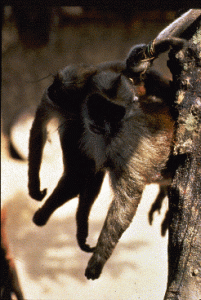 Notes: Two monkeys, killed by African hunters, hang from a tree branch.
Scientific name: Colobus verus (olive colobus)
You may wish to discuss the idea of hunting as a sustainable activity, versus non- sustainable hunting.
Photo © by: Courtesy WRPRC AV Archive
Notes: Two monkeys, killed by African hunters, hang from a tree branch.
Scientific name: Colobus verus (olive colobus)
You may wish to discuss the idea of hunting as a sustainable activity, versus non- sustainable hunting.
Photo © by: Courtesy WRPRC AV Archive
Notes: Two monkeys, killed by African hunters, hang from a tree branch.
Scientific name: Colobus verus (olive colobus)
You may wish to discuss the idea of hunting as a sustainable activity, versus non- sustainable hunting.
Photo © by: Courtesy WRPRC AV Archive
34) Animals from the wild have been collected for exhibition in zoos for a long, long time. Because of the interest in preserving species, animals that are endangered are rarely captured for this purpose now. Instead zoos are trying to breed animals in captivity to meet the human desire to see rare and beautiful animals, such as these ring-tailed lemurs.
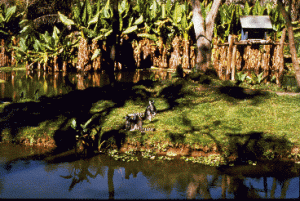 Notes: A zoo enclosure. A group of ring-tailed lemurs (center, foreground) on an island surrounded by a moat.
Scientific name: Lemur catta
lemurs — LEE-mers
Photo © by: Mike Putnam
Notes: A zoo enclosure. A group of ring-tailed lemurs (center, foreground) on an island surrounded by a moat.
Scientific name: Lemur catta
lemurs — LEE-mers
Photo © by: Mike Putnam
Notes: A zoo enclosure. A group of ring-tailed lemurs (center, foreground) on an island surrounded by a moat.
Scientific name: Lemur catta
lemurs — LEE-mers
Photo © by: Mike Putnam
35) Zoos educate the public about endangered primates by exhibiting them. Here an exhibit in a Japanese zoo allows people to learn more about a type of monkey found in many Asian countries – the macaque.
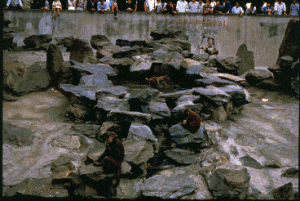 Notes: While a crowd watches, rhesus macaques climb and forage in a rock and cement covered area.
Scientific name: Macaca mulatta
macaque — ma-KACK
Photo © by: Ann Savage
Notes: While a crowd watches, rhesus macaques climb and forage in a rock and cement covered area.
Scientific name: Macaca mulatta
macaque — ma-KACK
Photo © by: Ann Savage
Notes: While a crowd watches, rhesus macaques climb and forage in a rock and cement covered area.
Scientific name: Macaca mulatta
macaque — ma-KACK
Photo © by: Ann Savage
36)Modern zoo exhibits are designed to meet the needs of the animals. Here a large enclosure provides plenty of opportunity for monkeys to climb and jump, as they would in a forest.
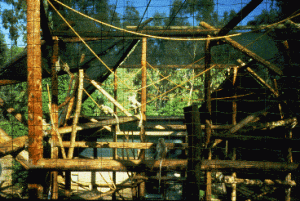 Notes: Another zoo enclosure. A large wooden climbing structure surrounded by a mesh roof and fence. Several langurs are visible.
Scientific name: Presbytis entellus (sacred langur)
Question: What kind of animals would be comfortable living in this enclosure?
Photo © by: A. Susan Clarke
Notes: Another zoo enclosure. A large wooden climbing structure surrounded by a mesh roof and fence. Several langurs are visible.
Scientific name: Presbytis entellus (sacred langur)
Question: What kind of animals would be comfortable living in this enclosure?
Photo © by: A. Susan Clarke
Notes: Another zoo enclosure. A large wooden climbing structure surrounded by a mesh roof and fence. Several langurs are visible.
Scientific name: Presbytis entellus (sacred langur)
Question: What kind of animals would be comfortable living in this enclosure?
Photo © by: A. Susan Clarke
37) What can be done to save the many endangered species of primates? Many people in countries around the world have been working on ways to help primates survive.
 Notes: Title Slide: What is being done to help?
Artwork © by: Courtesy WRPRC AV Archive
Notes: Title Slide: What is being done to help?
Artwork © by: Courtesy WRPRC AV Archive
Notes: Title Slide: What is being done to help?
Artwork © by: Courtesy WRPRC AV Archive
38) Captive breeding programs may offer the only hope for some species.
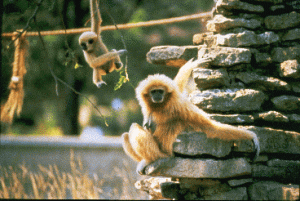 Notes: Mother and infant gibbon living in a zoo.
Scientific name: Hylobates lar
Photo © by: Columbus Zoo
Notes: Mother and infant gibbon living in a zoo.
Scientific name: Hylobates lar
Photo © by: Columbus Zoo
Notes: Mother and infant gibbon living in a zoo.
Scientific name: Hylobates lar
Photo © by: Columbus Zoo
39) Most zoos participate in the Species Survival Plan designed for each endangered species in captivity. A zoo birth is a happy event, not only for the mother and the people who come to see a zoo baby, but also for the preservation of the species.
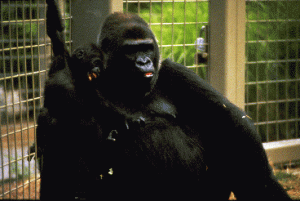 Notes: Mother lowland gorilla with young infant.
Scientific name: Gorilla gorilla gorilla
Photo © by: Columbus Zoo
Notes: Mother lowland gorilla with young infant.
Scientific name: Gorilla gorilla gorilla
Photo © by: Columbus Zoo
Notes: Mother lowland gorilla with young infant.
Scientific name: Gorilla gorilla gorilla
Photo © by: Columbus Zoo
40) Some species are bred in captivity and then released into the wild. These lion tamarins are native to Brazil but are very highly endangered because of the almost complete destruction of their habitat. Captive-born animals are being carefully released into wild forest preserves.
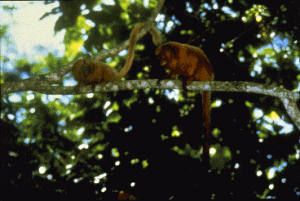 Notes: Two small monkeys with reddish fur sitting on a tree branch. Photo taken in a Brazilian nature preserve.
Scientific name: Leontopithecus rosalia
Photo © by: Luis Claudio Marigo
Notes: Two small monkeys with reddish fur sitting on a tree branch. Photo taken in a Brazilian nature preserve.
Scientific name: Leontopithecus rosalia
Photo © by: Luis Claudio Marigo
Notes: Two small monkeys with reddish fur sitting on a tree branch. Photo taken in a Brazilian nature preserve.
Scientific name: Leontopithecus rosalia
Photo © by: Luis Claudio Marigo
41) In the first six years of this reintroduction project, 33 animals were successfully released and they produced 21 surviving offspring. Thus the reintroduction project initiated by zoos and researchers in both the U.S. and Brazil meant more than 50 new animals were living in the wild.
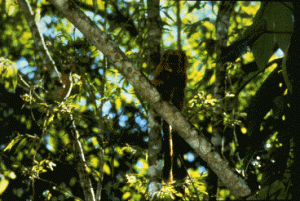 Notes: Lion tamarin feeding in a tree.
Less than 200 of these animals remained in the wild before this reintroduction project began.
Question to think about: How could you count the number of wild animals living in an area?
Photo © by: Luis Claudio Marigo
Notes: Lion tamarin feeding in a tree.
Less than 200 of these animals remained in the wild before this reintroduction project began.
Question to think about: How could you count the number of wild animals living in an area?
Photo © by: Luis Claudio Marigo
Notes: Lion tamarin feeding in a tree.
Less than 200 of these animals remained in the wild before this reintroduction project began.
Question to think about: How could you count the number of wild animals living in an area?
Photo © by: Luis Claudio Marigo
42) Saving species in the wild requires changing the human activities that endanger the animals. This can only be done when people are educated about the need for conservation. Animals and the areas they live in can be protected. Captive breeding and reintroduction of captive-born animals into the wild may be the only ways to save some species.
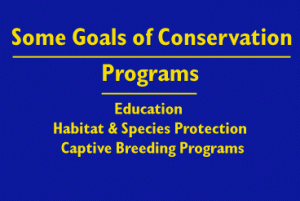 Notes: Title Slide: Some Goals of Conservation Programs, Education, Habitat and Species Preservation, Captive Breeding Programs
Photo © by: Courtesy WRPRC AV Archive
Notes: Title Slide: Some Goals of Conservation Programs, Education, Habitat and Species Preservation, Captive Breeding Programs
Photo © by: Courtesy WRPRC AV Archive
Notes: Title Slide: Some Goals of Conservation Programs, Education, Habitat and Species Preservation, Captive Breeding Programs
Photo © by: Courtesy WRPRC AV Archive
43) Saving species in the wild requires changing the human activities that endanger the animals. This can only be done when people are educated about the need for conservation. Animals and the areas they live in can be protected. Captive breeding and reintroduction of captive-born animals into the wild may be the only ways to save some species.
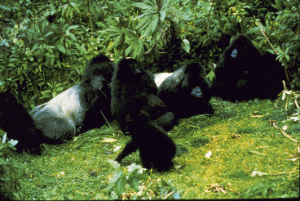 Notes: Group of mountain gorillas, including two silverback males, relaxing in a forest clearing.
Scientific name: Gorilla gorilla beringei
Photo © by: Bill Weber & Amy Vedder
Notes: Group of mountain gorillas, including two silverback males, relaxing in a forest clearing.
Scientific name: Gorilla gorilla beringei
Photo © by: Bill Weber & Amy Vedder
Notes: Group of mountain gorillas, including two silverback males, relaxing in a forest clearing.
Scientific name: Gorilla gorilla beringei
Photo © by: Bill Weber & Amy Vedder
44) They live in east-central Africa, high in the Virunga mountains.
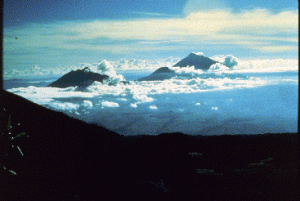 Notes: Mountains rising out of the clouds.
Photo © by: Bill Weber & Amy Vedder
Notes: Mountains rising out of the clouds.
Photo © by: Bill Weber & Amy Vedder
Notes: Mountains rising out of the clouds.
Photo © by: Bill Weber & Amy Vedder
45) These mountains are located in one of the most densely populated areas in the world.
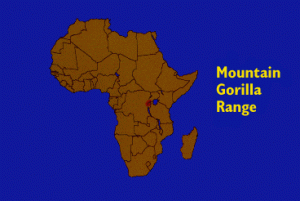 Notes: Map — Mountain Gorilla Range (in red)
The gorilla range includes parts of the countries of Rwanda, Uganda and Zaire.
Photo © by: Courtesy WRPRC AV Archive
Notes: Map — Mountain Gorilla Range (in red)
The gorilla range includes parts of the countries of Rwanda, Uganda and Zaire.
Photo © by: Courtesy WRPRC AV Archive
Notes: Map — Mountain Gorilla Range (in red)
The gorilla range includes parts of the countries of Rwanda, Uganda and Zaire.
Photo © by: Courtesy WRPRC AV Archive
46) Under pressure from a growing population, farmers are pushing their way up the mountains and into the forest reserve of the gorillas. Humans and gorillas compete for land and resources. The gorillas in the center of this picture have lost part of their habitat to humans.
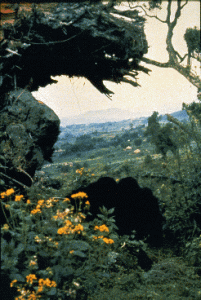 Notes: In the foreground, gorillas sit amidst flowers. Fields and buildings are visible in the background.
Photo © by: Bill Weber & Amy Vedder
Notes: In the foreground, gorillas sit amidst flowers. Fields and buildings are visible in the background.
Photo © by: Bill Weber & Amy Vedder
Notes: In the foreground, gorillas sit amidst flowers. Fields and buildings are visible in the background.
Photo © by: Bill Weber & Amy Vedder
47) People have killed gorillas for their head and hands. When someone was willing to pay large sums of money for such trophies, it was difficult to keep poor people from trying to earn a little extra income to feed their families. Fortunately, due to the worldwide interest in saving endangered species, the market for such items has virtually disappeared.
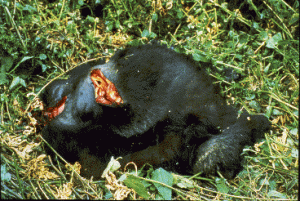 Notes: Body of a mountain gorilla. The head and arms have been cut off.
There have been no reports of this kind of poaching for the past several years.
Photo © by: Courtesy WRPRC AV Archive
Notes: Body of a mountain gorilla. The head and arms have been cut off.
There have been no reports of this kind of poaching for the past several years.
Photo © by: Courtesy WRPRC AV Archive
Notes: Body of a mountain gorilla. The head and arms have been cut off.
There have been no reports of this kind of poaching for the past several years.
Photo © by: Courtesy WRPRC AV Archive
48) Adult gorillas may also be killed so their infants can be taken as pets. While local people cannot afford to keep such large animals as pets, they are sometimes taken out of the country illegally to meet the demand of the pet and zoo trade.
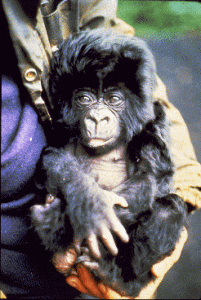 Notes: Gorilla infant held by human.
Photo © by: Courtesy WRPRC AV Archive
Notes: Gorilla infant held by human.
Photo © by: Courtesy WRPRC AV Archive
Notes: Gorilla infant held by human.
Photo © by: Courtesy WRPRC AV Archive
49) Although the gorillas live in a protected area, human hunters seeking meat for their families sometimes set snares for antelope in the forest.
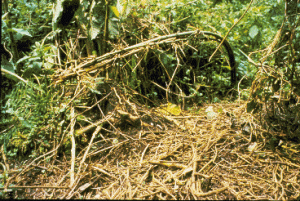 Notes: Forest floor with snare partially hidden.
Question: Can you see the snare?
Photo © by: Courtesy WRPRC AV Archive
Notes: Forest floor with snare partially hidden.
Question: Can you see the snare?
Photo © by: Courtesy WRPRC AV Archive
Notes: Forest floor with snare partially hidden.
Question: Can you see the snare?
Photo © by: Courtesy WRPRC AV Archive
50) These snares may catch an unintended animal, such as this gorilla. Notice how her fingers are deformed from being caught in the snare. This animal was lucky and survived, but others have died.
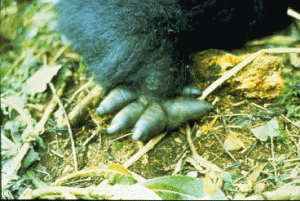 Notes: Closeup of mountain gorilla’s hand with swollen and deformed fingers.
Photo © by: Courtesy WRPRC AV Archive
Notes: Closeup of mountain gorilla’s hand with swollen and deformed fingers.
Photo © by: Courtesy WRPRC AV Archive
Notes: Closeup of mountain gorilla’s hand with swollen and deformed fingers.
Photo © by: Courtesy WRPRC AV Archive
51) Gorillas caught in snares may die due to starvation or infection. The animal being carried down from the mountains has died and will be buried by these park rangers.
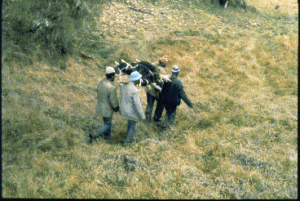 Notes: The body of gorilla is tied to a wooden frame being carried by park rangers.
Photo © by: Courtesy WRPRC AV Archive
Notes: The body of gorilla is tied to a wooden frame being carried by park rangers.
Photo © by: Courtesy WRPRC AV Archive
Notes: The body of gorilla is tied to a wooden frame being carried by park rangers.
Photo © by: Courtesy WRPRC AV Archive
52) One aspect of conservation which can create an income for the local people, and still preserve gorilla groups, is tourism. Here a group of visitors watch a gorilla family. When the local human population sees the economic benefits of leaving an area in a wild state, conservation projects are more likely to be effective.
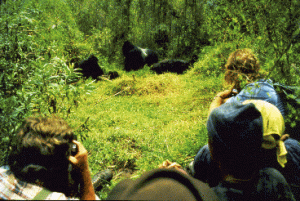 Notes: In the foreground a group of tourists watch a group of mountain gorillas, including a large silverback male in center.
Questions to think about: How do wild animals become habituated to the presence of humans? Is this always a good thing?
Photo © by: Courtesy WRPRC AV Archive
Notes: In the foreground a group of tourists watch a group of mountain gorillas, including a large silverback male in center.
Questions to think about: How do wild animals become habituated to the presence of humans? Is this always a good thing?
Photo © by: Courtesy WRPRC AV Archive
Notes: In the foreground a group of tourists watch a group of mountain gorillas, including a large silverback male in center.
Questions to think about: How do wild animals become habituated to the presence of humans? Is this always a good thing?
Photo © by: Courtesy WRPRC AV Archive
53) Researchers in the same area are able to study gorilla behavior and ecology. This provides information on how best to conserve these animals. It also means gorillas become used to the presence of humans and they can be closely approached by tourist groups.
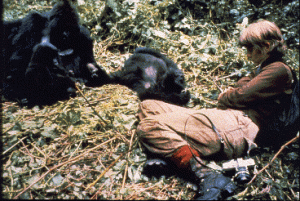 Notes: A scientist (Amy Vedder) sits near some of the mountain gorillas she is studying.
The following section is about a different species and a different part of the world.
Photo © by: Bill Weber & Amy Vedder
Notes: A scientist (Amy Vedder) sits near some of the mountain gorillas she is studying.
The following section is about a different species and a different part of the world.
Photo © by: Bill Weber & Amy Vedder
Notes: A scientist (Amy Vedder) sits near some of the mountain gorillas she is studying.
The following section is about a different species and a different part of the world.
Photo © by: Bill Weber & Amy Vedder
54) A primate which faces extinction in another part of the world is the black howler monkey. This monkey gets its name from the roaring call it produces. Howlers spend their entire life in the trees.
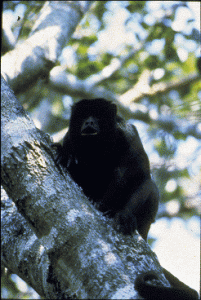 Notes: A black monkey, with mouth open, sits in a tree.
Scientific name: Alouatta caraya
Photo © by: Luis Claudio Marigo
Notes: A black monkey, with mouth open, sits in a tree.
Scientific name: Alouatta caraya
Photo © by: Luis Claudio Marigo
Notes: A black monkey, with mouth open, sits in a tree.
Scientific name: Alouatta caraya
Photo © by: Luis Claudio Marigo
55) This map shows the range of this species of howler. A project in the small Central American country of Belize is designed to protect the animal.
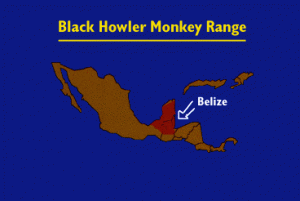 Notes: Map — Black Howler Monkey Range (in red)
The range of this species of howler includes parts of Mexico and the countries of Guatemala and Belize. Belize is the smallest country under the red.
Artwork © by: Courtesy WRPRC AV Archive
Notes: Map — Black Howler Monkey Range (in red)
The range of this species of howler includes parts of Mexico and the countries of Guatemala and Belize. Belize is the smallest country under the red.
Artwork © by: Courtesy WRPRC AV Archive
Notes: Map — Black Howler Monkey Range (in red)
The range of this species of howler includes parts of Mexico and the countries of Guatemala and Belize. Belize is the smallest country under the red.
Artwork © by: Courtesy WRPRC AV Archive
56) The remaining howlers live in forests along the Belize river.
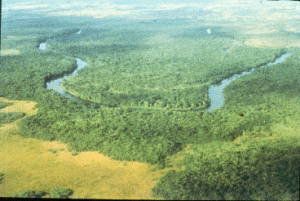 Notes: View from the air — a curving river with forests along the edge and cleared areas in foreground and background.
Photo © by: Robert Horwich and Howlers Forever
Notes: View from the air — a curving river with forests along the edge and cleared areas in foreground and background.
Photo © by: Robert Horwich and Howlers Forever
Notes: View from the air — a curving river with forests along the edge and cleared areas in foreground and background.
Photo © by: Robert Horwich and Howlers Forever
57) They move through the forest along the aerial pathway provided by unlogged trees. Howlers are completely adapted to life in the trees. They are excellent climbers, and spend their entire life above the ground.
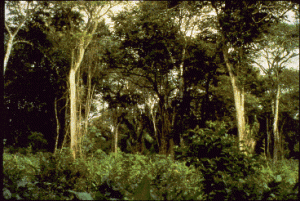 Notes: A forest in Belize.
Photo © by: Robert Horwich and Howlers Forever
Notes: A forest in Belize.
Photo © by: Robert Horwich and Howlers Forever
Notes: A forest in Belize.
Photo © by: Robert Horwich and Howlers Forever
58) When farmers cut down trees to make space for new fields, they cut the pathways of the howlers. This can isolate the monkeys from their food sources, and from other members of their species.
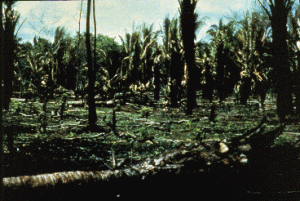 Notes: Partially deforested farm land.
Photo © by: Robert Horwich and Howlers Forever
Notes: Partially deforested farm land.
Photo © by: Robert Horwich and Howlers Forever
Notes: Partially deforested farm land.
Photo © by: Robert Horwich and Howlers Forever
59) The conservation plan for the howler monkeys started with talking directly to the local farmers. Farmers were persuaded to leave strips of forest along the edges of their fields to maintain the howler highways.
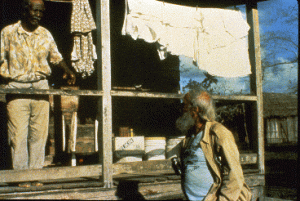 Notes: A farmer stands on his porch and talks to a bearded scientist (Robert Horwich).
This project is called the Community Baboon Sanctuary. Although the protected monkeys are not baboons, this is what they are called by the local residents.
Photo © by: Robert Horwich and Howlers ForeverPartially deforested farm land.
Photo © by: Robert Horwich and Howlers Forever
Notes: A farmer stands on his porch and talks to a bearded scientist (Robert Horwich).
This project is called the Community Baboon Sanctuary. Although the protected monkeys are not baboons, this is what they are called by the local residents.
Photo © by: Robert Horwich and Howlers ForeverPartially deforested farm land.
Photo © by: Robert Horwich and Howlers Forever
Notes: A farmer stands on his porch and talks to a bearded scientist (Robert Horwich).
This project is called the Community Baboon Sanctuary. Although the protected monkeys are not baboons, this is what they are called by the local residents.
Photo © by: Robert Horwich and Howlers ForeverPartially deforested farm land.
Photo © by: Robert Horwich and Howlers Forever
60) Beginning in 1985, farmers were recruited to the plan. Each signed a pledge to manage their land for the benefit of both their families and the monkeys.
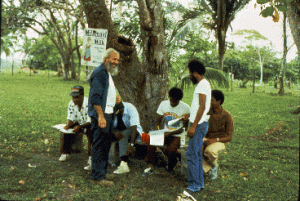 Notes: A group of farmers sit on a bench while they sign the conservation agreement.
More than 100 landowners have agreed to this plan and more than 1000 monkeys live in the protected areas.
Photo © by: Robert Horwich and Howlers Forever
Notes: A group of farmers sit on a bench while they sign the conservation agreement.
More than 100 landowners have agreed to this plan and more than 1000 monkeys live in the protected areas.
Photo © by: Robert Horwich and Howlers Forever
Notes: A group of farmers sit on a bench while they sign the conservation agreement.
More than 100 landowners have agreed to this plan and more than 1000 monkeys live in the protected areas.
Photo © by: Robert Horwich and Howlers Forever
61) In the howler sanctuary, researchers are able to study the behavior of the howlers. They are learning more about what the animals eat and how they live.
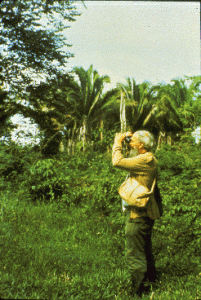 Notes: A scientist watches monkeys through his binoculars.
Photo © by: Robert Horwich and Howlers Forever
Notes: A scientist watches monkeys through his binoculars.
Photo © by: Robert Horwich and Howlers Forever
Notes: A scientist watches monkeys through his binoculars.
Photo © by: Robert Horwich and Howlers Forever
62) Tourism is also part of the plan to bring money into the local area to encourage conservation of the animals. Birds and other animals who live in the same area also benefit from the conservation plan — and provide another attraction for tourists.
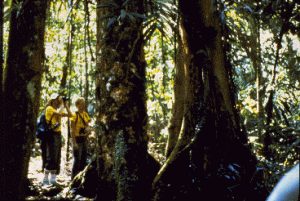 Notes: Three humans stand under the protected trees and look for monkeys.
Photo © by: Courtesy WRPRC AV Archive
Notes: Three humans stand under the protected trees and look for monkeys.
Photo © by: Courtesy WRPRC AV Archive
Notes: Three humans stand under the protected trees and look for monkeys.
Photo © by: Courtesy WRPRC AV Archive
63) Local people earn money as guides for tourists. People who may have a difficult time feeding their families find it hard to understand why they should try to save animals who occupy potential farming land. When local people see a direct profit from conserving the animals, they are more likely to help save them.
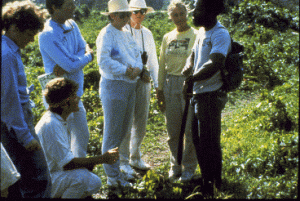 Notes: A local resident talking to a group of visitors.
Photo © by: Robert Horwich and Howlers Forever
Notes: A local resident talking to a group of visitors.
Photo © by: Robert Horwich and Howlers Forever
Notes: A local resident talking to a group of visitors.
Photo © by: Robert Horwich and Howlers Forever
64) Although the original idea for the howler sanctuary came from outside researchers, it was the local people who suggested tourists might want to see, and hear, their black howler neighbors.
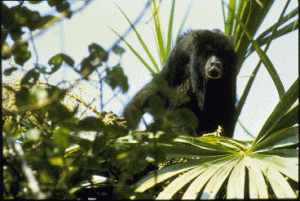 Notes: A black howler monkey calls from high in the trees.
Photo © by: Luis Claudio Marigo
Notes: A black howler monkey calls from high in the trees.
Photo © by: Luis Claudio Marigo
Notes: A black howler monkey calls from high in the trees.
Photo © by: Luis Claudio Marigo
65) School children in the area also come to learn more about howlers.
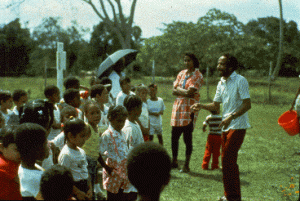 Notes: School children on a field trip.
Photo © by: Robert Horwich and Howlers Forever
Notes: School children on a field trip.
Photo © by: Robert Horwich and Howlers Forever
Notes: School children on a field trip.
Photo © by: Robert Horwich and Howlers Forever
66) A museum in the community sanctuary has exhibits on many of the animals that live in the area.
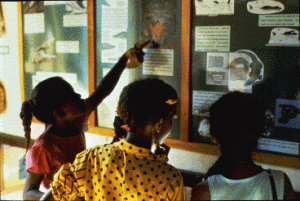 Notes:Inside the museum, young visitors examine a display on the reptiles who live in the same area as the howler monkeys.
Photo © by: Robert Horwich and Howlers Forever
Notes:Inside the museum, young visitors examine a display on the reptiles who live in the same area as the howler monkeys.
Photo © by: Robert Horwich and Howlers Forever
Notes:Inside the museum, young visitors examine a display on the reptiles who live in the same area as the howler monkeys.
Photo © by: Robert Horwich and Howlers Forever
67) These children are happy to learn more about this unique monkey which they and their families are helping to save. In the museum they can see a skeleton of the howler monkey. They know that living monkeys share their land because of their efforts.
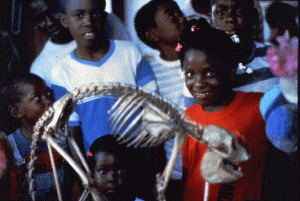 Notes: Children in the museum look at the mounted skeleton of a howler monkey.
Scientific name: Alouatta pigra
Students may notice the expanded lower jaw of the monkey. This provides space for a resonating chamber which produces the loud call from which the howler gets its name.
Photo © by: Robert Horwich and Howlers Forever
Notes: Children in the museum look at the mounted skeleton of a howler monkey.
Scientific name: Alouatta pigra
Students may notice the expanded lower jaw of the monkey. This provides space for a resonating chamber which produces the loud call from which the howler gets its name.
Photo © by: Robert Horwich and Howlers Forever
Notes: Children in the museum look at the mounted skeleton of a howler monkey.
Scientific name: Alouatta pigra
Students may notice the expanded lower jaw of the monkey. This provides space for a resonating chamber which produces the loud call from which the howler gets its name.
Photo © by: Robert Horwich and Howlers Forever
68) The howler monkey is only one of many species of primates and other animals which are endangered in the wild.
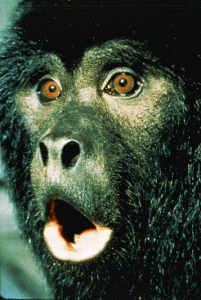 Notes: Closeup of a howler monkey.
Photo © by: Twycross Zoo
Notes: Closeup of a howler monkey.
Photo © by: Twycross Zoo
Notes: Closeup of a howler monkey.
Photo © by: Twycross Zoo
69) What can we all do to protect the primates?
 Notes: Title slide: What Can You Do?
This is a question for discussion.
Artwork © by: Courtesy WRPRC AV Archive
Notes: Title slide: What Can You Do?
This is a question for discussion.
Artwork © by: Courtesy WRPRC AV Archive
Notes: Title slide: What Can You Do?
This is a question for discussion.
Artwork © by: Courtesy WRPRC AV Archive
70) Endangered species are protected by laws in many countries. But their survival can only be assured when the humans who share the land with these species make a commitment to preserve their habitat.
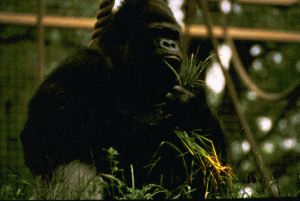 Notes: A lowland gorilla gazes into the future.
Scientific name: Gorilla gorilla gorilla
Photo © by: Nancy Staley
Notes: A lowland gorilla gazes into the future.
Scientific name: Gorilla gorilla gorilla
Photo © by: Nancy Staley
Notes: A lowland gorilla gazes into the future.
Scientific name: Gorilla gorilla gorilla
Photo © by: Nancy Staley
71) Credits
 Notes: Production Credits
Artwork © by: Chris Lutmerding
Notes: Production Credits
Artwork © by: Chris Lutmerding
Notes: Production Credits
Artwork © by: Chris Lutmerding
72) Credits
 Notes: Funding Credit
Artwork © by: Chris Lutmerding
Notes: Funding Credit
Artwork © by: Chris Lutmerding
Notes: Funding Credit
Artwork © by: Chris Lutmerding